Home / Courses / Paths of the Craft
Free
Module 7 · Lesson 3 of 4
Christian, atheist, and omnist
A friend asked what you actually did this week. The true answer was smaller than the speech you had prepared. Then this lesson, “Christian, atheist, and omnist,” showed up as something you could do before the tea cooled. A Christian witch keeps Christian faith and a craft. This school does not teach church doctrine. You do not need a better room first. You need a smaller promise. If the promise needs a forest, a crowd, or a closed tradition’s prayer, it is the wrong size.
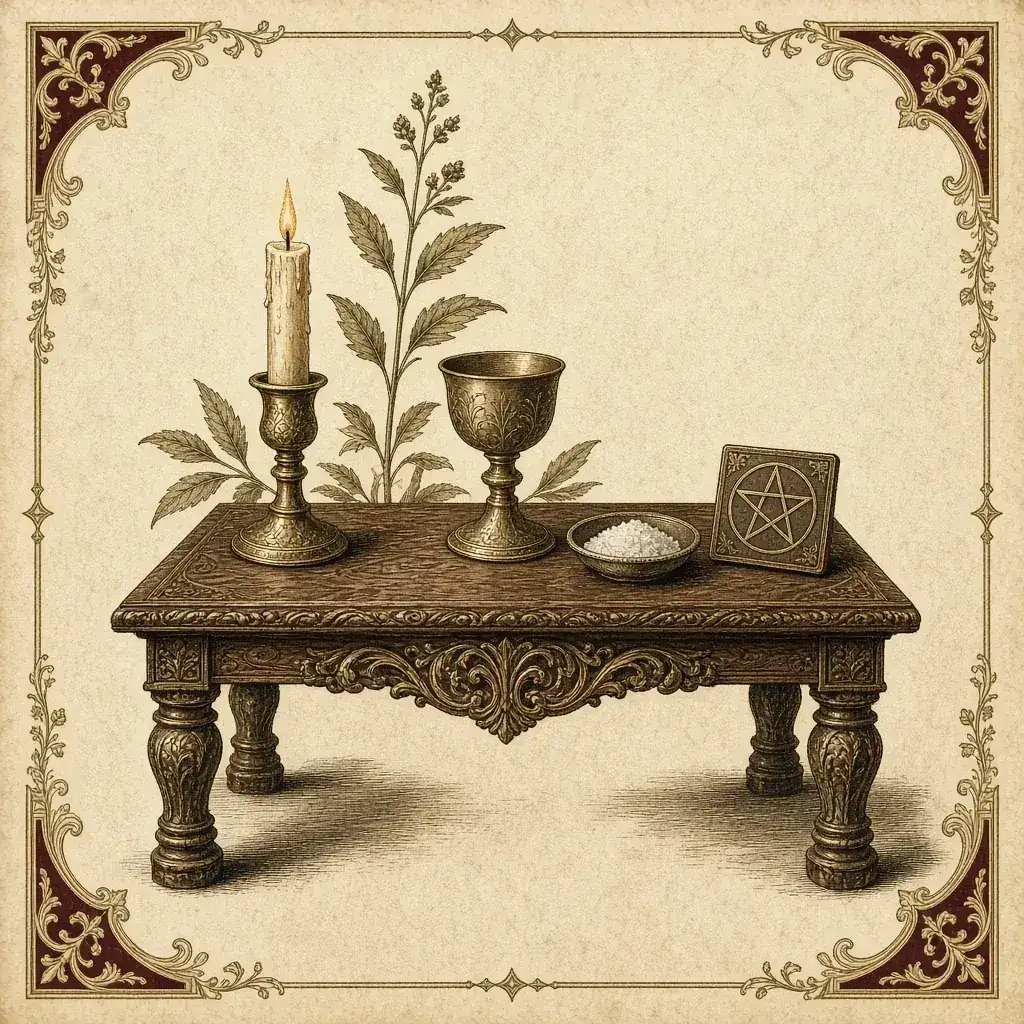
An atheist witch needs no gods. An omnist still owes closed practices their closed doors. Stay with that motion until you could teach it to a friend who is ready to practice. In Paths of the Craft, the module “Many kinds of witches” is only useful if it changes what your hands do this week. Give it ten quiet minutes, not a new identity. Keep a timer if you drift. Stop while you are still kind to the people who share the air. The picture is the craft at work: color, herb, flame, and moon each carry power. Do the ordinary piece the picture was pointing at: the call, the sweep, the bedtime, the budget line.
Historical harm sits in the background. Be careful, not cute. Name the limit out loud once. Limits are how a craft stays a craft instead of a hunger. If flame is involved, you stay in the room and you know how the flame dies. If plants are involved, you do not eat what you cannot identify, and you learn the plant before it goes in a cup. If a step aims at another person’s will, drop the step and keep the journal. Hoodoo, Lukumí, Vodou, Candomblé, and specific Indigenous ceremonies remain outside every course here, even when a picture looks cousin to them.
Give the idea a body. A Christian witch keeps Christian faith and a craft. This school does not teach church doctrine. Do it once at a size that fits today, then write three lines: what you did, what you refused, and what you can point to in the room. Write what answered, and keep the line. If you want a Cunningham-style measure, it is this: could you repeat it tomorrow with what is already in the house? If not, shrink it.
Try it
A quick check
Deeper reading
For the student who wants another layer: stay with the practice until you can teach it in your own words, then read these books and rewrite any example before you use it.
- Scott Cunningham — Wicca: A Guide for the Solitary Practitioner (1988). A solitary overview. Paraphrase it; do not copy the rites.
- Thea Sabin — Wicca for Beginners (2006). Clear about expectations.
- Starhawk — The Spiral Dance (1979; 1999). Reclaiming history and practice.